
Case Study — 03
CareCanopy: A Family-Built Platform for Caregiving

- Role
- Product Designer & Creator
- Timeline
- 2026 Personal Project
- Tech Stack
- Lovable.ai, Supabase, Twilio SMS
01
The Origin Story & Problem
CareCanopy was born out of personal necessity. Following a diagnosis of Lewy Body Dementia in the family, navigating the daily logistics of caregiving became overwhelming. Traditional care management apps are built for institutional facilities—cold, overly complex, and disconnected from the reality of coordinating care among siblings, cousins, and older relatives.
Unlike a standard portfolio mock project, CareCanopy is a fully functional web application built to solve real-world family caregiving challenges, brought to life through rapid development with Lovable.ai and Supabase.
The Goal: Design an empathetic, ultra-simple care coordination platform that unifies family schedules, centralizes vital medical information, and reduces the mental load on primary caregivers without requiring high technical literacy from participating family members.
02
Technical & UX Constraints
- Low-Friction Adoption: Must be intuitive enough for older family members who struggle with clunky healthcare portals.
- Real-Time Syncing: Multi-user updates across households so everyone stays aligned on medication schedules and shift changes.
- Automated Reliability: SMS-driven reminders (via Twilio) for shift handoffs and care notes, ensuring nothing falls through the cracks.
03
User-Led Iterations: Designing with Real Family Feedback
Because this app was deployed and tested by real users (our own family members) navigating active caregiving, the product evolved rapidly through hands-on usage. Key iterations included:
- Frictionless Dashboard Care Reports: Added the ability to log and view detailed care reports directly from the home dashboard, ensuring critical updates (mood shifts, medication timing, or incident notes) are immediately visible to everyone logging in without digging through sub-menus.
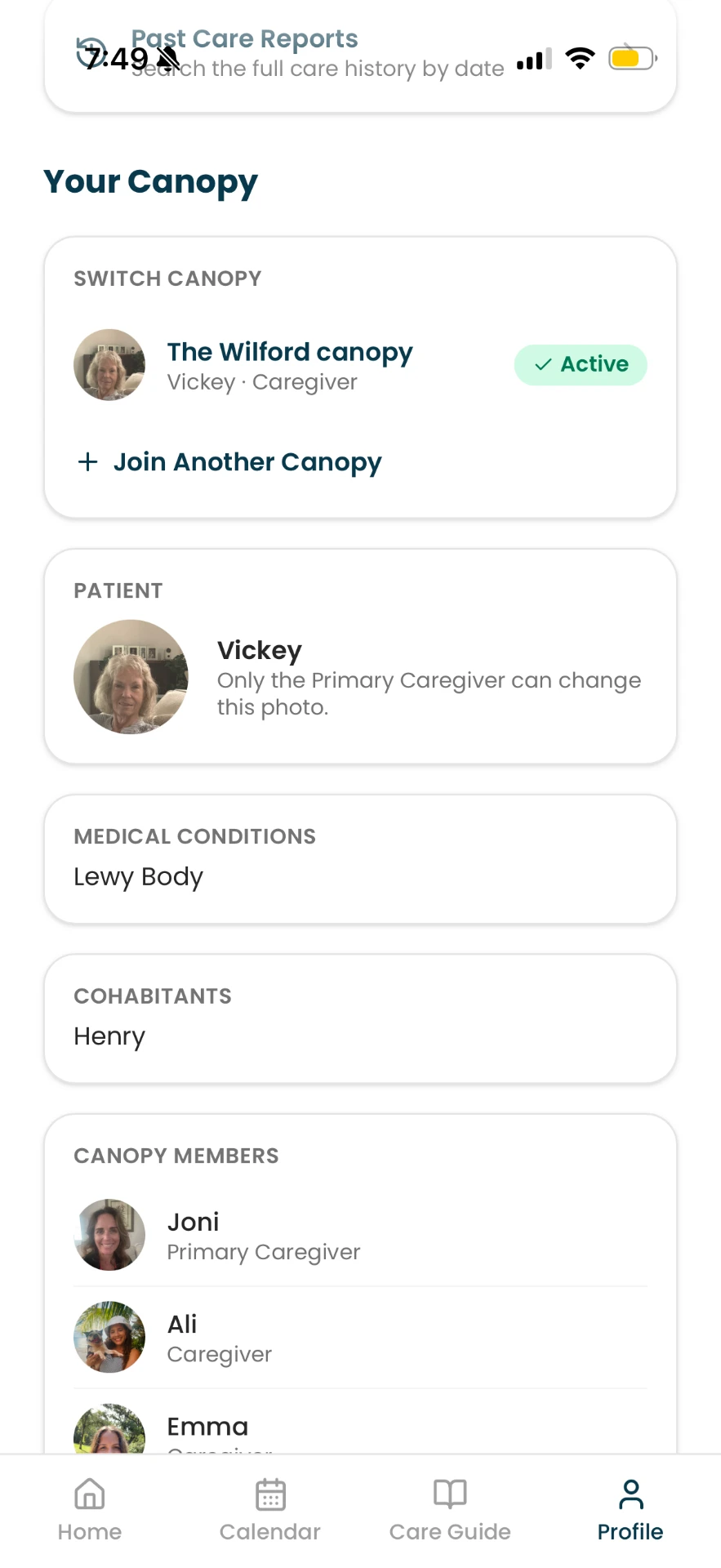
- Account & Profile Control: Introduced the ability to edit user phone numbers and upload/replace profile photos for quick visual identification during shift swaps.
- Restructured Care Guide: Replaced a linear, click-through sequence with an expandable dropdown module system, allowing family members to jump straight to specific care protocols (e.g., managing sundowning or medication timings) instantly.
- Multi-Canopy Architecture: Added support for users to belong to multiple canopies simultaneously (e.g., coordinating care across different households or family circles) while giving users the freedom to leave a canopy safely without deleting their account.
- Personalized Patient Context: Added a dedicated profile section to upload and display a photo of the patient, providing immediate, reassuring context for newer aides or visiting family members.
04
Architecture & Core Features
- Shared Shift Calendar: A collaborative schedule for managing rotating care responsibilities, eliminating endless group chat threads.
- Real-Time Care Reports: Structured daily logging for meals, vitals, cognitive state, and behavioral changes, keeping all family members perfectly synchronized across shifts.
- Searchable Care Repository: A centralized home for medical documents, doctor’s notes, and daily care protocols.
- Automated SMS Check-ins: Twilio-powered text reminders that prompt caregivers to log updates post-shift.
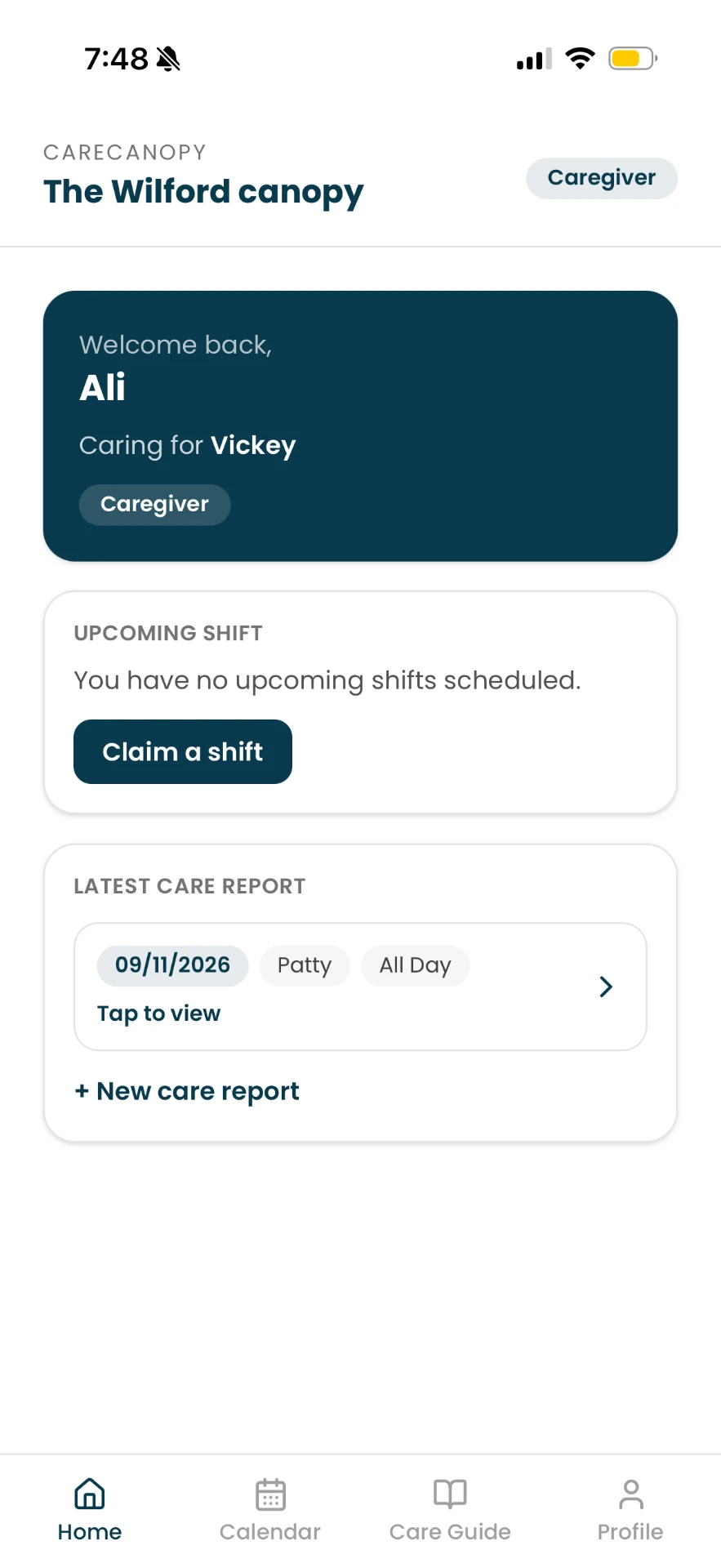
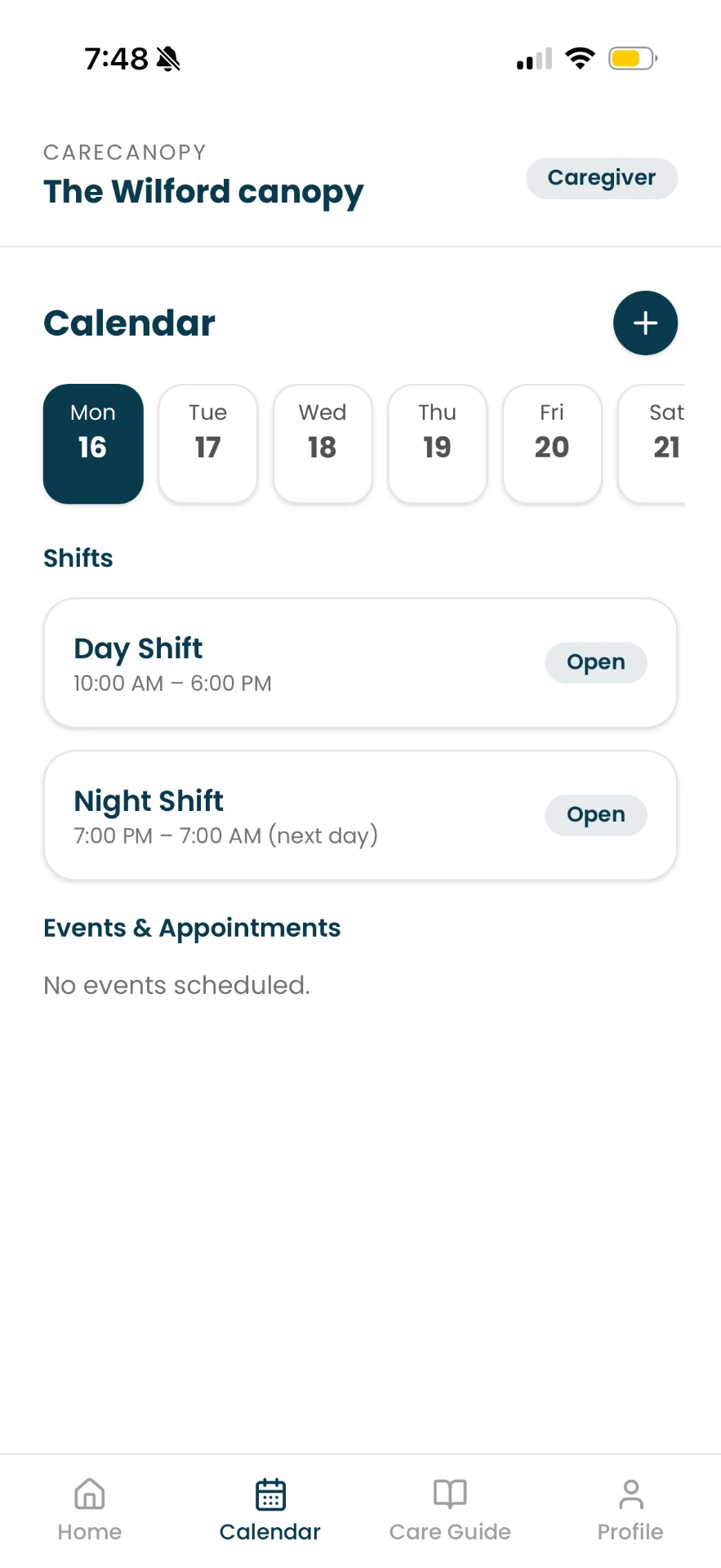
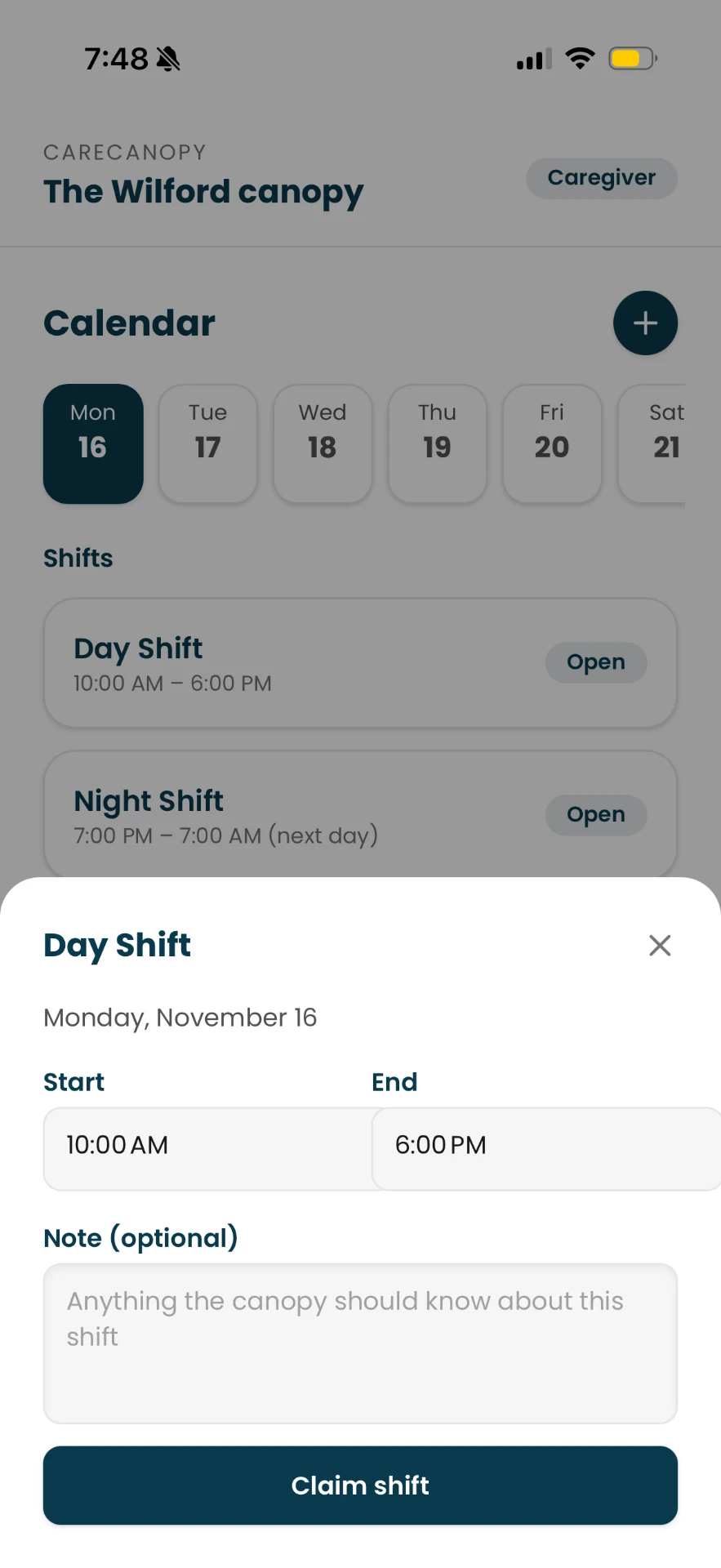
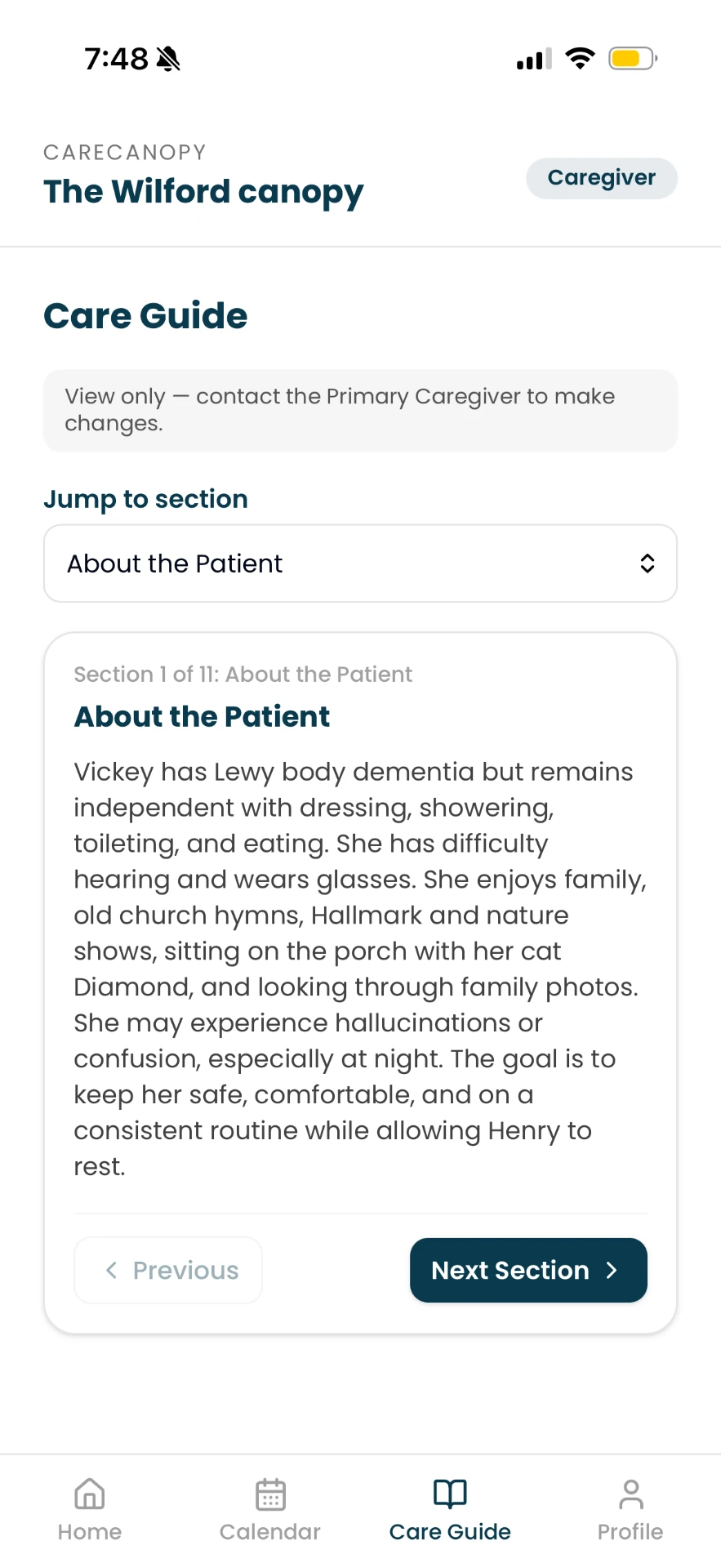
01 / Home Dashboard
05
Impact & Reflection
CareCanopy proved that the most impactful software often comes from solving your own problems. By leveraging AI-assisted development (Lovable) alongside thoughtful UX architecture, I was able to take a deeply personal family challenge and turn it into a robust, living product that brings order, clarity, and peace of mind to family caregiving.
The video below demonstrates real-world family care coordination workflows and modern mobile-first design patterns for collaborative tools.
Next Case Study
Reimagining a Legacy: Berkshire Hathaway Brand & Web Redesign